Understanding Opaque Lenses
Opaque lenses are specifically engineered to entirely obstruct the flow of light through them. These lenses play a crucial role in settings where the complete exclusion of light is necessary. They are typically employed in applications where privacy is of paramount importance, such as in privacy screens or certain types of eyewear that do not necessitate visibility. The defining attribute of opaque lenses is their total lack of transparency; no light is permitted to pass through them. Consequently, they are perfectly suited to environments that demand absolute opacity, effectively minimizing any form of light or visual interference.
Applications of Opaque Lenses
Opaque lenses serve numerous purposes across different applications. One such application is in camera shutters, where they are used to temporarily block light exposure until it is required. This capability is crucial for achieving the desired photographic effect. Additionally, opaque lenses are integral to certain types of safety goggles that must shield the wearer’s eyes from harmful light sources, thus providing necessary protection. Beyond technical applications, these lenses also find their place in the world of decorative arts and interior design, where they help preserve privacy and reduce unwanted glare or visibility.
Characteristics of Opaque Lenses
Opaque lenses are characterized by a complete blockage of light, an aspect that distinguishes them from other types of lenses. They are generally crafted from materials that inherently prevent light transmission, such as dense plastics or specialized coatings that are designed to maximize opacity. The materials and construction of opaque lenses make them indispensable in settings where control over light and privacy is a top priority.
Exploring Translucent Lenses
Unlike opaque lenses, translucent lenses allow for the passage of light, albeit in a reduced and diffused manner. These lenses offer an intermediary solution between the total light obstruction of opaque lenses and the full light transmission of transparent lenses. Translucent lenses are strategically used to achieve a harmonious balance, enabling some light to pass through while still diffusing it to provide partial visibility. This controlled light diffusion makes these lenses suitable for a variety of applications, where soft lighting or moderate visibility is required.
Applications of Translucent Lenses
Translucent lenses are prevalent in scenarios that require soft, diffused lighting while not entirely sacrificing privacy. For example, in decorative lighting fixtures, translucent lenses are employed to create a gentle and aesthetically pleasing illumination that avoids the harshness of direct light. This same principle is applied in certain types of sunglasses designed to protect the eyes from intense light while still allowing enough light to ensure visibility. Furthermore, translucent lenses are utilized in architectural designs, where the goal is to cultivate environments that are gently illuminated, harmonizing light with design elements to avoid stark contrasts.
Characteristics of Translucent Lenses
Translucent lenses are defined by their ability to diffuse incoming light, offering partial visibility. They can be constructed from materials such as frosted glass or specific polymers that are engineered to achieve the desired degree of translucency. These materials enable the lenses to provide illumination while maintaining a level of privacy or aesthetic softness in the spaces they are applied.
Choosing Between Opaque and Translucent Lenses
The decision to use opaque or translucent lenses hinges primarily upon the desired outcome. When complete privacy and total blockage of light are essential, opaque lenses emerge as the optimal choice. In contrast, if the objective involves admitting some light while still preserving certain aspects of privacy or creating a particular lighting aesthetic, translucent lenses become the favorable option. Each lens type brings distinct characteristics to the table, fulfilling various functional and visual requirements.
In summary, both opaque and translucent lenses serve unique and valuable purposes within their respective domains. Opaque lenses are an ideal solution for applications where absolute light exclusion is necessary, contributing to privacy and protection. Translucent lenses, with their ability to provide soft, diffused light, are versatile in areas where some light transmission is desired. The choice between these two types of lenses should be made based on a careful assessment of the specific needs and goals of the intended application.
For further exploration of opaque and translucent lenses and their myriad applications, consulting resources such as specialized optical manufacturers and scientific journals can provide a wealth of detailed information and technical insights into the properties and innovations within the field of lens technology.

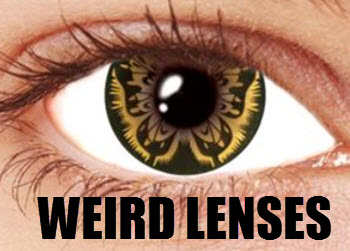
 Cosmetic contact lenses